About this episode
Murat Çorlu runs Synaps Media, a managed Ghost host, and was last on the show in episode 7. On 15 November he opened the public beta of Social Web, a native app for Ghost's social web on iPhone, iPad and Mac. Jannis uses Android, so he built the Android version, Social Web for Ghost, with Murat's code open next to it. Murat has no Android phone, and Jannis has no iPhone.
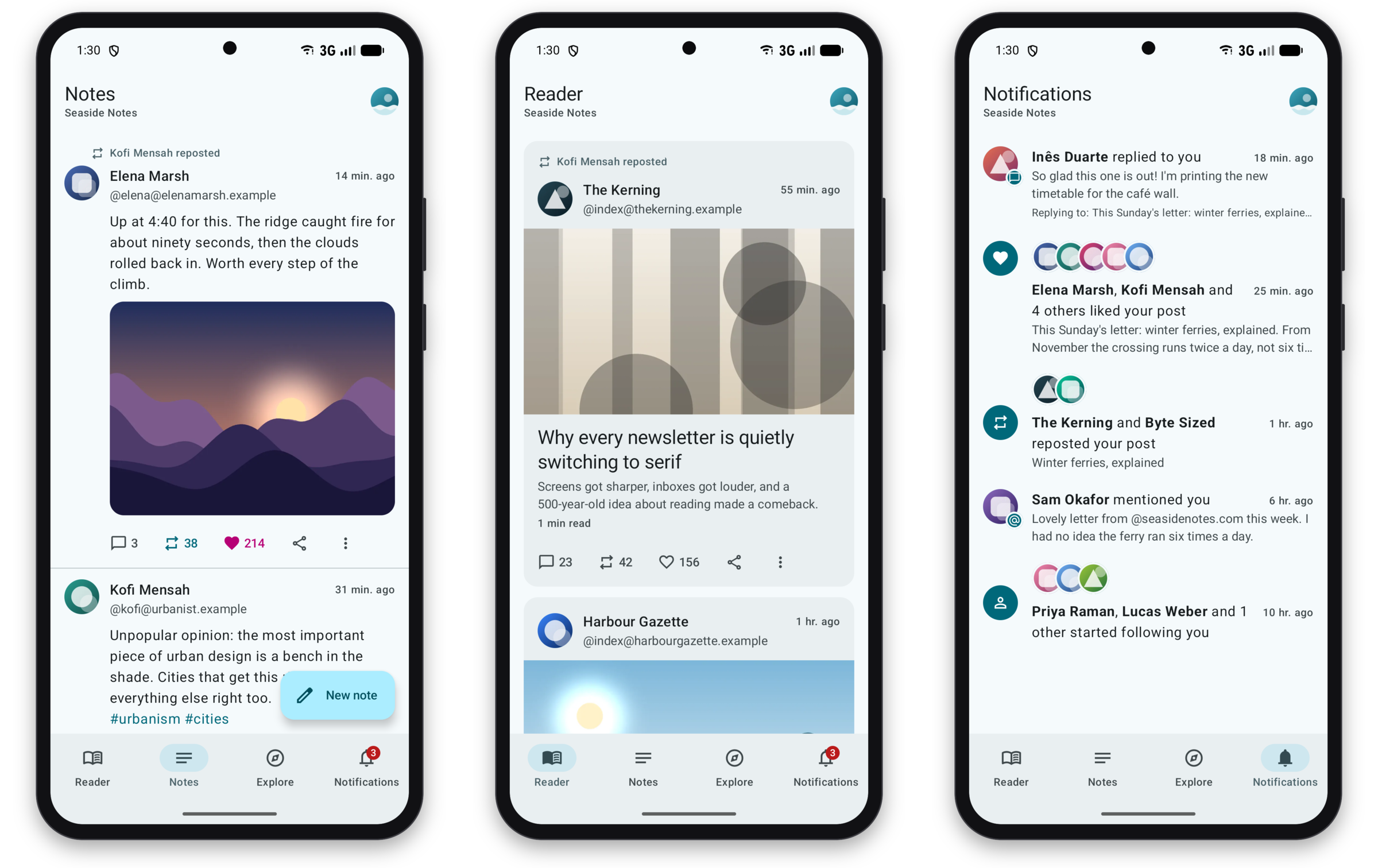
They start with the basics: what the social web is, why it works like email, and what the Network tab in Ghost 6 does. Then Murat explains why microblogging needs a phone, how he built the iOS app in three days, and why the code is the cheap part when the experience comes from using a platform every day. They go through what the apps add on top of Ghost Admin (the share sheet, notifications, replies fetched from the original server, members-only posts in the reader) and how they plan to bring those ideas back into Ghost itself.
Screenshots
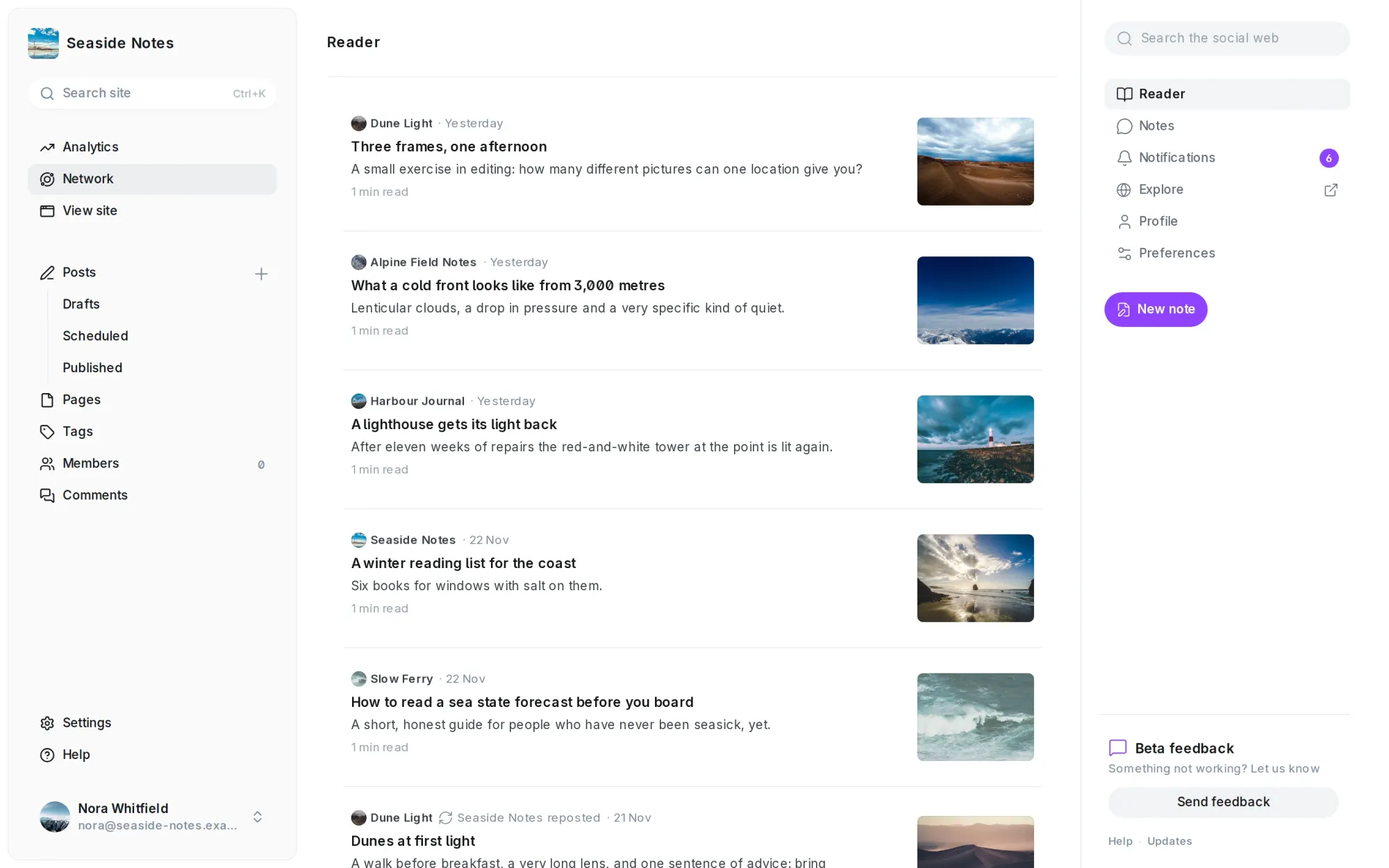
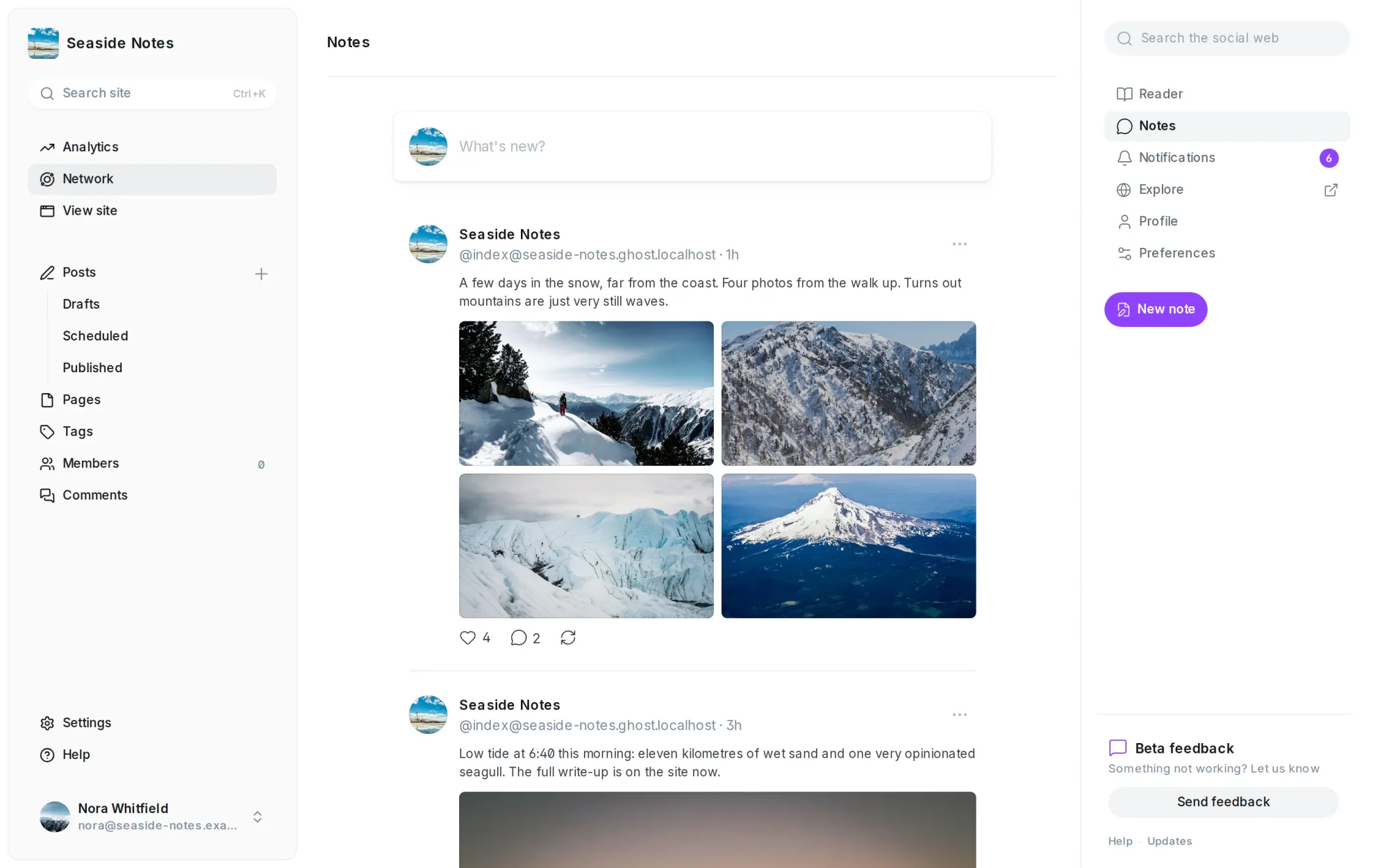
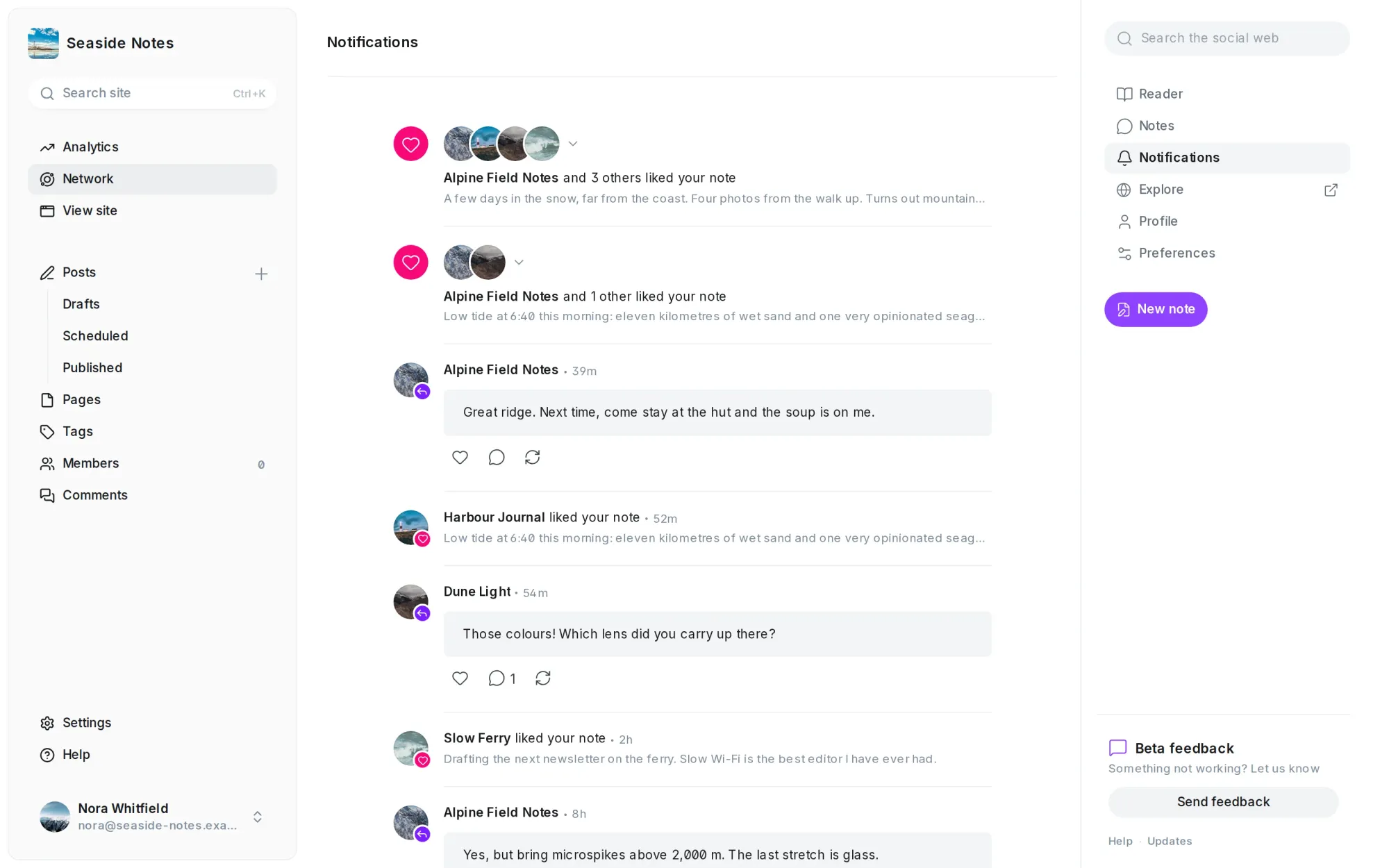
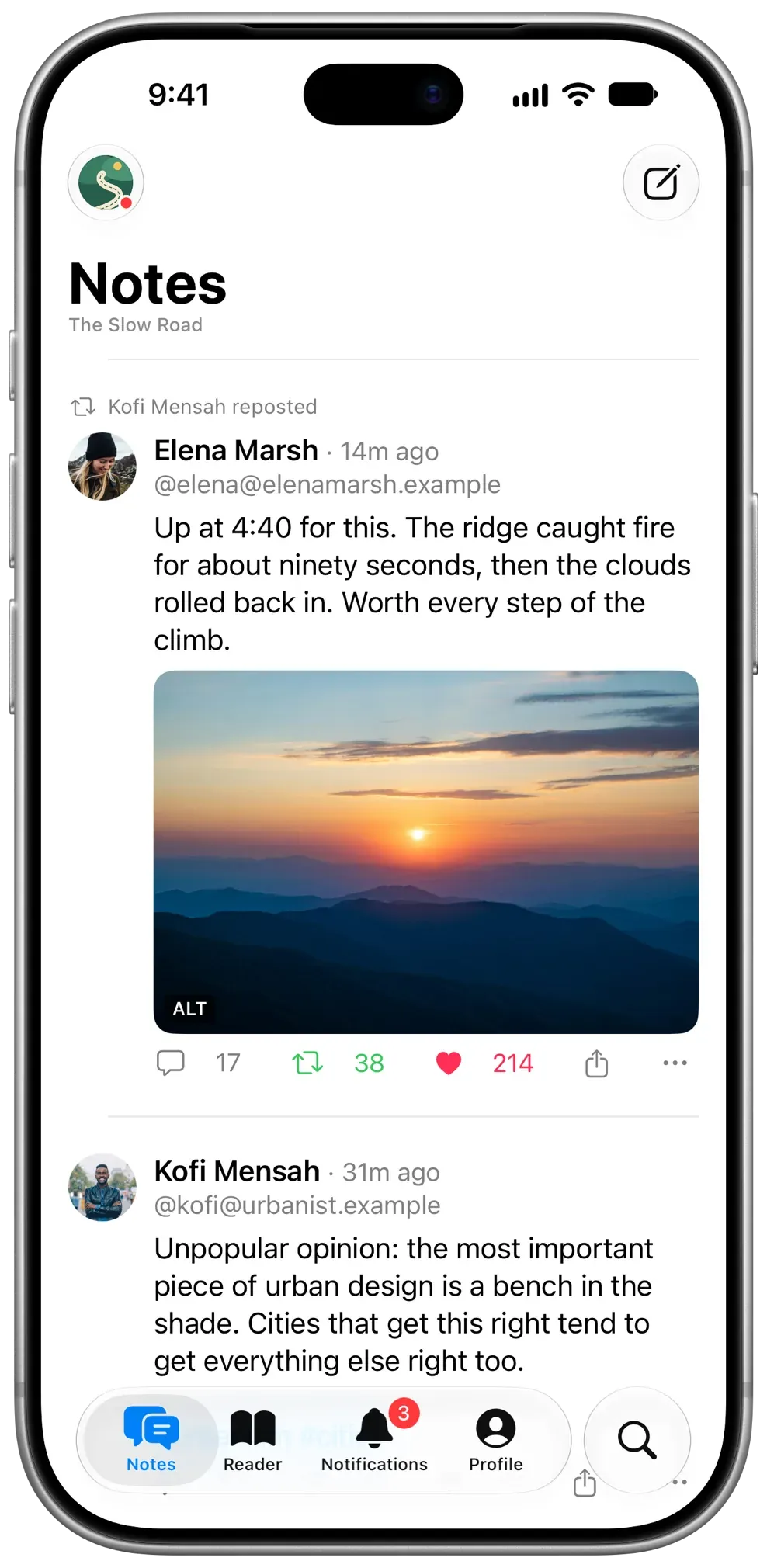
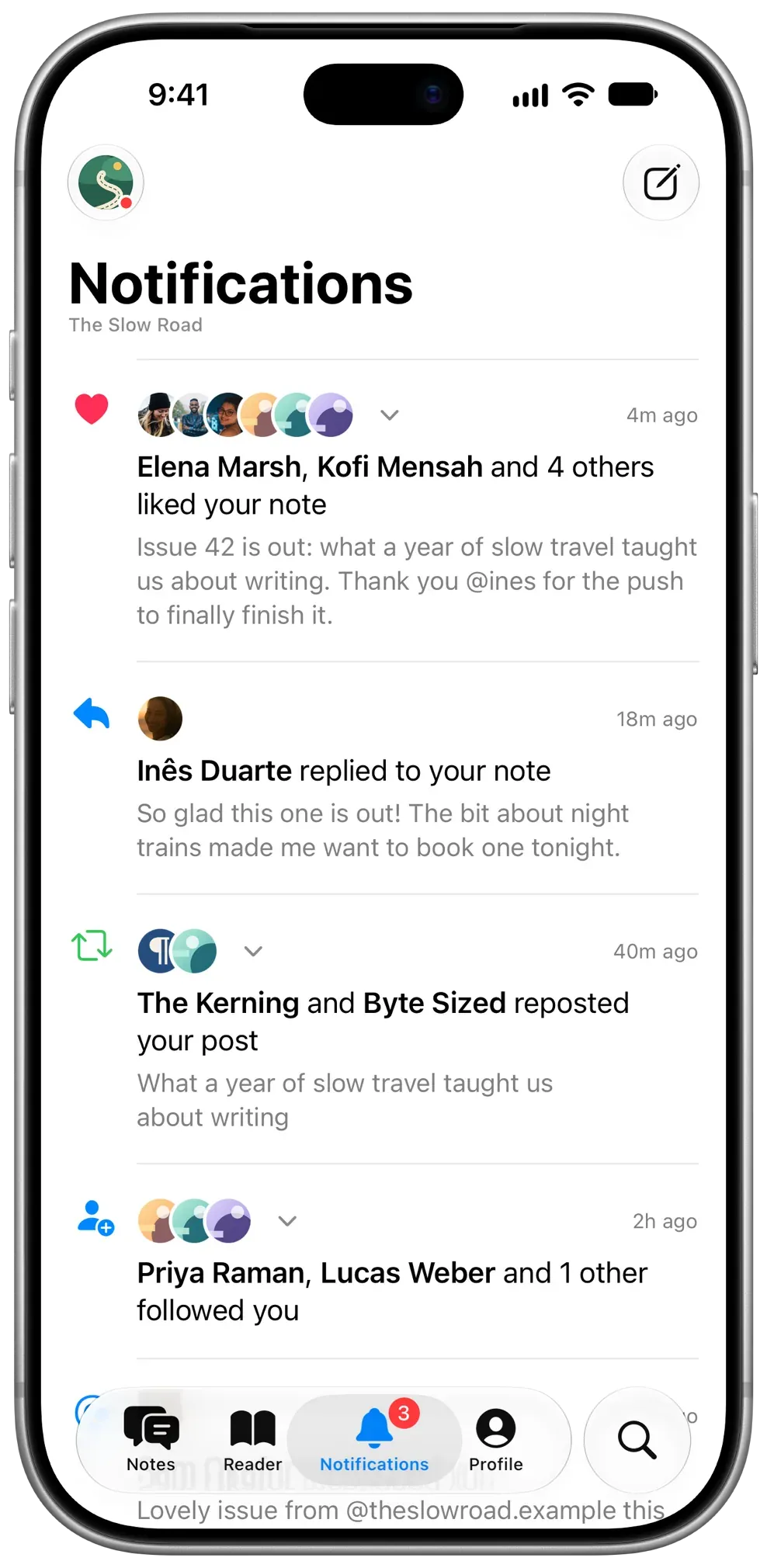
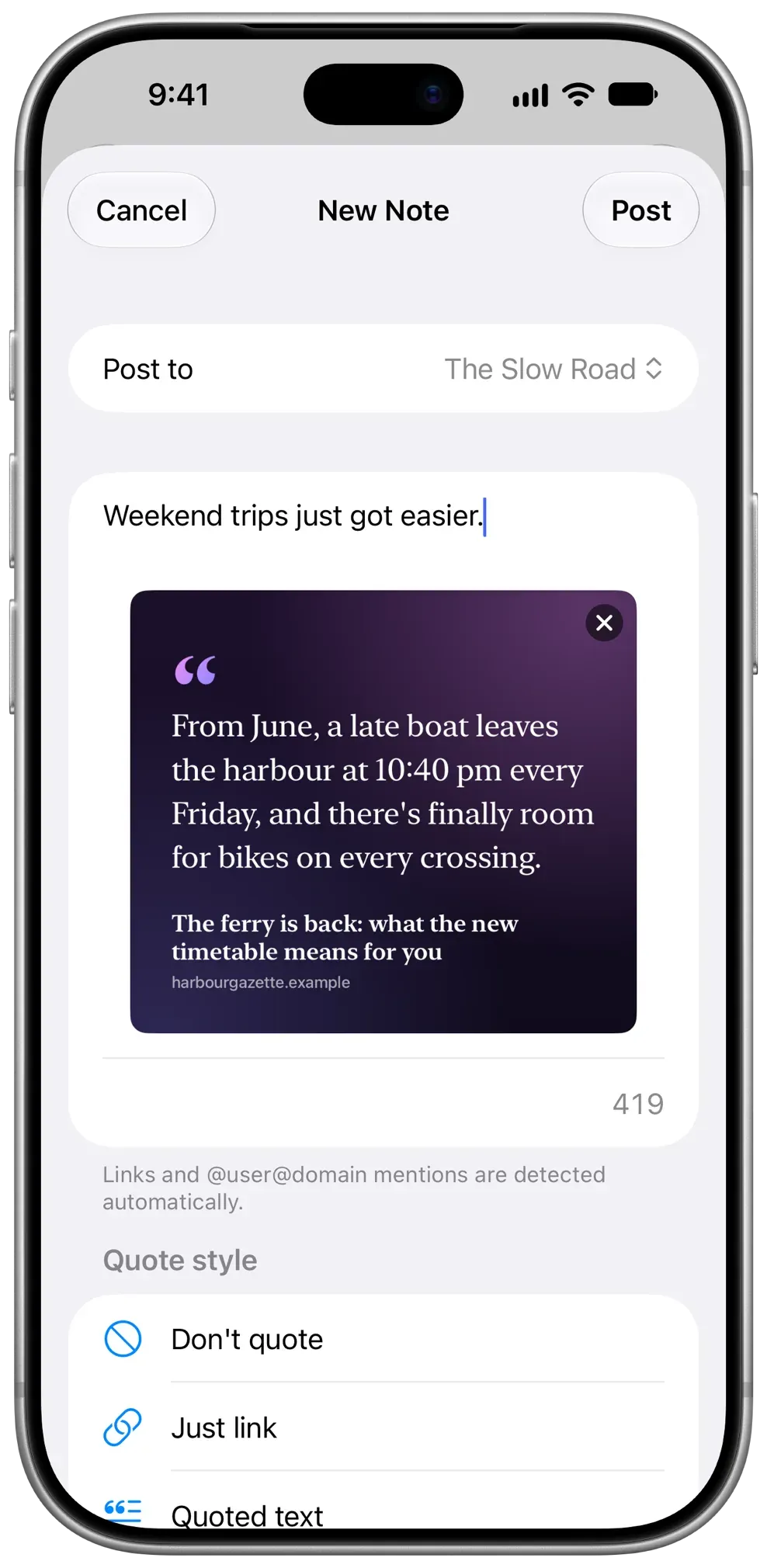
Social Web on iPhone: Notes, Notifications, and a highlighted passage shared as a quote card. Screenshots: Synaps Media.
Chapters
- 0:00 — Welcome back, Murat — this time we're building something together
- 1:26 — What is the social web?
- 4:03 — It works like email
- 5:48 — The social web in Ghost: Reader and Notes
- 7:18 — Ghost 6, and Synaps Media's Mastodon roots
- 9:01 — High hopes, and hashtags still missing
- 9:20 — Microblogging needs a phone
- 11:59 — An iOS app in three days
- 13:22 — Why Jannis built the Android version
- 15:04 — Build for the platform you use every day
- 17:21 — The code is the cheap part
- 18:28 — Different phones, different design languages
- 20:52 — Why native, not a web or hybrid app
- 22:12 — What the apps add: the share sheet
- 23:44 — Notifications
- 24:46 — Replies fetched from the original server
- 25:51 — Translation, alt text and cross-device cleanup
- 27:04 — Open source
- 27:49 — "That's how ActivityPub works" is not an answer
- 29:41 — Showing Mastodon quote posts and replies in place
- 31:11 — Bringing it back to Ghost
- 32:03 — Reaching readers beyond Substack
- 33:54 — A reader for the Ghost sites you follow
- 35:52 — A proof of concept for Ghost core
- 36:46 — Snowy peaks, and why notes need four images
- 38:54 — Other Ghost servers in the Explore view
- 39:25 — Try the betas, and send feedback
- 40:44 — Wrap-up, and a standing invitation
Links & mentions
- Social Web for iPhone, iPad and Mac — Murat's app, from Synaps Media
- Social Web on TestFlight — join the iOS, iPadOS and macOS beta
- Social Web for Ghost on Android — the Android app, and how to join the Google Play test
- Social Web for Ghost on GitHub — the Android app's source code, MIT licence
- Social Web for Ghost is coming to Android — Jannis's announcement
- Synaps Media — Murat's managed Ghost hosting
- muratcorlu.com — Murat's personal site, on Ghost
- Episode 7 — A calmer way to run Ghost — Murat's first episode, and still the longest one
- Ghost's social web guide — the Network tab in Ghost 6
- ActivityPub — the W3C standard behind the social web
- Mastodon
- Pixelfed
- Bridgy Fed — the bridge that connects the social web and Bluesky
- Hashtags for Ghost's ActivityPub server — Jannis's pull request for the most requested missing feature
- Up to four images in notes and replies — the pull request that came out of the mountain walk (and its Ghost Admin side)
- Four images in Ghost Admin's social web
- SwiftUI
- Kotlin — what the Android app is written in
- Material Design — Google's design system, swipeable tabs included
- ML Kit pose detection — the toolkit behind Jannis's home-gym app, his first Android project
Transcript
Jannis: Hi, and welcome to the Magic Pages podcast, where we sit down with the people building hosting and publishing on Ghost. My name is Jannis, and today Murat from Synaps Media is back. Last time we talked about how two competitors, well, us, think about the Ghost ecosystem, and today we're taking it a step further, because we're building something together. Murat has put out an app for Ghost social web for the Apple ecosystem, and I ended up building the Android version. And the reason is not a grand strategy, but just practicality. Murat doesn't have an Android phone, and I don't have an iPhone. Murat, welcome back on the podcast.
Murat: Thank you. Thank you for having me again.
Jannis: Well, of course. Murat, for anyone who missed our last episode, can you just quickly tell us who you are and what Synaps Media does?
Murat: Yeah, I'm Murat Çorlu. I live in the Netherlands, and I'm a software engineer, have experienced more than 20 years. And since three years, I'm working on Synaps Media, another managed hosting provider for Ghost CMS.
Jannis: If you want to know more about what Murat and Synaps Media do, we have, I think it's still the longest episode on the podcast, as far as I remember. So I linked that in the show notes, and we went a little bit more into the details there. But today we want to talk about the social web, and specifically creating apps for the social web, so that we make the experience that Ghost offers a little bit more accessible. But before we get to the apps, let's start at the very beginning.
Because I think a lot of people listening have probably seen the Network tab in Ghost, and probably can't quite put it together. So Murat, if you had to explain the social web to someone who has only ever used Instagram or Twitter/X, how would you describe that?
Murat: Yeah, that's a tricky one because we always tend to explain the things without technical details because that doesn't make sense for many of the people. The main example is the email that many people use. Maybe first we can mention what is the problem about the other social media, like Twitter or Instagram or something. The main problem about those is all of them are by some companies with their own agenda. And by using their platforms, you are contributing to their business, unintentionally, generally. Their business decisions can change how they publish or serve your own content. This causes problems in times, we already noticed this, sometimes political issues, sometimes issues between different countries, et cetera.
And also because of the crazy things that the owning company is doing, like Elon Musk. So ActivityPub is a web standard, like email or web or HTTP, everything we use is part of the internet. ActivityPub is one of them, actually. It's not that much popular, but it allows websites or platform on the internet to interconnect to each other, send and receive. So by using this protocol, you are able to publish your content and your content can be followed by some others, and they don't need to be a member of your own platform. This is the main difference between the Twitter and let's say, Mastodon. Mastodon is the most popular ActivityPub platform.
So there can be multiple Mastodon server providers, they're all independent, but still someone using server A can subscribe to content from server B. And that allows you to really own your content, even you can host your ActivityPub server on your server if you are technical. You can connect your own domain, so no one can manipulate or try to change who will see your content, who will not see or put advertisements in it, et cetera, that kind of things. You can avoid all of these with the ActivityPub backed social web implementation.
Jannis: I would maybe come back to what you said in the beginning, to use email as a comparison. At least when I first heard about the social web, it's also sometimes called the Fediverse. That's when it first clicked for me a couple of years ago, when somebody explained it like this. You can have a Gmail account, you can have an Outlook account with two different companies, two very different companies at that. I can have an inbox at Gmail, but I can send a message to Murat on Outlook and Murat will receive it. Murat can forward this to somebody else, Murat can also reply to me. And we have a communication chain going on. And that is similar to the social web, where we on Ghost have the ability to join the social web, to interact in the social web with our Ghost website and somebody on Mastodon, what Murat mentioned, has the same ability.
We can post content and somebody on Mastodon can read it. They can like it, they can react to it, they can repost this, they can reply to it. And the connecting threads in between ActivityPub, the protocol, makes sure that we have that interconnectivity that even though I'm using Ghost, Murat might be using Mastodon, we are speaking the same language and we can communicate same as you don't need to have a Gmail account to talk to a Gmail inbox in that sense. And that for me is, for example, the big difference because if Meta decides, well, Instagram is no more because Instagram doesn't make any money or something, or there are political restrictions on TikTok, for example, in the US, nobody can do that with the open social web.
Nobody can do that with an open standard because this open standard doesn't belong to anyone and therefore nobody can take it away. Somebody can shut down a Mastodon server, but I can take my stuff, I can get my content, I can take my account and move it somewhere else. It's still there. The connections I built are still there. I want to just quickly also dive into what the social web actually is because I noticed that sometimes when we talk on the podcast here, it's a bit hard for people to imagine.
So first of all, we will put some screenshots into the show notes so you can imagine what the social web is on Ghost, or the network tab on Ghost. But just to describe it, it's essentially like a microblogging format. It has two components. It has a reader, which is where Ghost's long form content is shown. So if I post an article or post on my blog or on the Magic Pages blog, it will show up there in the long form with most of the things that you can post into the Ghost editor intact. And people can react to that, they can like it, they can comment on it, they can repost it.
And then the second part is something that Ghost calls notes. And that's, I would say the microblogging format we all know from Twitter that Mastodon also adapted, that Threads from Instagram now also adapted. So you kind of have the same functionality there. Everybody has a profile and this is how it all comes together. For me personally, it's a little Twitter replacement because I left Twitter, I don't even know how many years ago when Elon Musk took it over and I decided this is an environment where I don't really want to be anymore. And since then I didn't have anything. I didn't have a microblogging thing of any sort. I blogged on my own personal blog in long form, but that was always the missing part.
That's what Ghost and the Network feature, the social web, filled for me. When Ghost announced that Ghost 6 will have this integration into the social web, do you remember what your thoughts were back then?
Murat: Actually, when I was telling the Synaps Media story in our previous episode, I already mentioned that Synaps Media was actually a hosting service for Mastodon five years ago when that Elon Musk took over Twitter. I already was very familiar with ActivityPub and Mastodon and I really liked the idea and I tried to use it as my main short form microblogging solution for years. And when I started to use Ghost, I experimented many times to use Ghost as my main microblogging solution as well. I tried with some templates or something. And when I heard that ActivityPub is coming to, I think it was six or eight months ago before the Ghost 6 release, I was very excited because for me could have so much benefit for Ghost publishers if we can use it wisely.
Synaps Media and Magic Pages adopted it in the same day. We published the ActivityPub servers for all of our customers and I invested on the social web even more because I really want to have my own microblogging solution that can be followed from anyone, from any places. It is perfect match for me that Ghost provides this because I'm also using Ghost and I'm even providing a Ghost hosting service. It was a perfect moment for me that in last year, August, when Ghost 6 released, we had the ActivityPub solution in Ghost, but since then didn't go as good as we expected.
Jannis: I think we had really high expectations and hope for the social web integration that Ghost has. I don't think that it's dead. I don't think that the Ghost Foundation gave up on it. I do think that it's still a big part of Ghost, but one of the biggest requested features, for example, which is hashtags, hasn't made it into the social web integration yet. So how does that all accumulate to, let's build an app, Murat? You started this whole journey. How did that happen from your side?
Murat: Actually, as I said, I already decided giving full intention for investment on social web when we had it with Ghost 6. Started to try to use social web as my main microblogging platform, but it was tricky. When we are talking about microblogging, it's different than writing an article for your Ghost blog. When you are writing an article, it generally takes hours, sometimes days, generally in front of your computer and you edit, you make research, et cetera.
But microblogging is about writing a very quick reaction to it that is happening now and you need to write it right away. You cannot keep it for next day. Then it will be already outdated. So generally being able to write something when you are on something else, like you are on mobile, the key point for microblogging. And that was the difficult part because currently with the only Ghost Admin we have, if you want to write something to your notes, yeah, you need to log into your Ghost Admin. And in mobile, it's not a very good experience. You need to find that post note in the admin and you need to write and send. And even after that, getting the notifications about replies or reactions to that note you wrote, not very easy.
You need to just regularly check your Ghost Admin. It's also same for publishers. One of the biggest points of having ActivityPub in Ghost was being able to reach more audiences with our content, the long-form contents, other than just your subscribers, let's say. So it allows that someone in Mastodon can notice your blog post and with reposts, blog posts can reach hundreds of thousands of people in a very quick time.
But that's technically possible, but even if it happens, you will not be able to notice it until you come back to Ghost Admin, because you can only see the notifications there currently. So even in last March, I experimented to make a Ghost menu bar application for myself in Mac because I really want to use it regularly, but sometimes I just forget to go to my Ghost Admin and I miss some replies waiting there for since three days, for example.
So I was trying to catch them somehow and trying to do some stuff. Two weeks ago, I think, one of my friends shared a mobile application he did with Claude and I'm surprised the quality of it because normally I have experience with iOS development. I made some SwiftUI applications before, but for me, both the development experience and also publishing experience of iOS development was very tiring. And since I'm already busy with the Synaps Media stuff, I was not eager to get that extra load for me, but then when I tried to make a POC with Claude, quite surprised that it removes all of the friction points of iOS development and the result goes very quickly.
And in three days, I had almost fully functional iOS, iPad, and macOS application that I could share with my friends, TestFlight, and I even surprised that the experience is even much better than I expected. It's not just a mobile UI of Ghost Admin. It allows you to add many more functionalities that can be very practical and useful for using social web. So then I decided to go on with that idea and share it first with the Ghost team and also with you, and you can tell the next part.
Jannis: Yeah. The next part is that when you open the beta, I already had it in my thought, okay, I don't have an iPhone. I'm a little bit annoyed sometimes with people just doing like, hey, I have this really cool thing. It's Apple only. And I'm like, okay, cool, thanks. It's really helpful. And I think the cool thing that I then thought is I've recently done a mobile app for Android just for myself, that helps me train in our home gym, that basically uses the camera, analyze movements, because there's a machine learning toolkit that can analyze your joint movement and everything.
So it can tell you, hey, this exercise you've just done is really stupid. Do that again, basically. And that was my first experience with Android development, and I loved learning so much about it. So when you shared that you had the beta for the iOS app, I just thought, well, instead of just being annoyed and just looking at it and just thinking, the people on iPhone now can use cool things, why not add the second part of it? It doesn't have to be a clone. It is still its own development. We're sharing many, many features, but why not add the Android side of those things? And yeah, that's what's been happening for, I think the last week or so that I've been developing the Android app on this side based on Kotlin in this case, which is technically multi-platform, but one step at a time.
Why do a multi-platform thing if you already have the native iOS version anyway? Yeah, that's where we are. We have an iOS app for the social web. We have an Android app for the social web. You also have an iPad app and a macOS app, which for Android, I don't think there's a good equivalent. I'm not going to do a Windows app or something because I also don't have a Windows thing, and I'm not going to do a Linux version because it's just not really a thing on Linux.
Murat: I would like to add something about making an application. There are probably some people listening to this podcast who has some software background and they already say that, yeah, you don't need to have an Android phone to make an Android application. You can use simulators or you can buy one. It's not that expensive. But for me, the main thing is the experience of an Android application because I don't use Android at all in my daily life. I'm not aware of what are the capabilities and what is a daily usage of an Android user. I'm not familiar with that. And I think that makes a big difference.
So I technically could ask Claude that, yeah, make Android version of this, please, and then it can provide something good looking, nice. But since I will not have that experience even after publishing it, if someone will complain about lacking of Android feature, I will not be aware of that. I will not be able to comment it. So when I first make the first TestFlight build, I also got that question in my mind that people will ask for Android versions. And I said, maybe Jannis can be a good candidate for this because I know you are using Android phones and you are already familiar with Ghost and you will probably like the idea of the application for social web.
So I think that made much more sense to try to make all of the application. For example, you mentioned the Windows application. I also asked that question myself, but I don't even probably able to use the Windows now because I don't remember when was the last time that I used the Windows. Technically, again, we can make Windows application that will probably work. We will not be able to easily understand if it is good or not, if it's the best application for Windows.
But if there are some people really into Windows and want to use Ghost social web on Windows as Windows application, then I think they should make that application as a companion for Windows. But people sometimes missing that point, they think that application is just a bunch of codes. It's not. The code is the cheap part. Code is the smallest part. The main part is the experience and experience comes from the experience with that platform.
So I'm using Apple ecosystem since more than 10 years. And as a software engineer, I always track all of the capabilities of the operating systems. And also I'm interested in the iOS design language. People can also notice that from Synaps Media panel because it's looking like iOS application. Because of that, I think I could manage to have a nice looking and nice working iOS application in a very short time range. I hope many people will like it. And I think same applies for you. You are already using many Android applications. You are familiar with the Android world and you made even quicker than me. In two days, you shared almost better than my iOS application that I was working for one week because you already know how Android works.
And other than just lack of the devices of other platforms, I think that is the main point why we share this work with you together.
Jannis: I think that's a very good point because I do actually have a test iPhone somewhere. I don't know where it is right now, but I do have an iPhone 11 or something that I have laying around somewhere that I use from time to time for those really, really weird bugs that you can only replicate on a native Safari with the entire sandboxing that it has. I use that for stuff on Ghost sometimes, like when customers ask us for advice. Is this a bug? Is this an issue on my device? And we also had an iOS bug in our customer portal at some point where that was really helpful.
But those are web applications and they look and feel more or less the same everywhere because they're, you know, web applications, they're not native applications. And I know that when I use my wife Mariia's iPhone sometimes with the new Glass UI or whatever it's called, I just look at it and I'm like, I don't know how Apple went down this route. It doesn't feel like Apple that I know from 10 years ago anymore. And I don't know how to use it. I really feel like a granddad sometimes just looking at her iPhone and I'm like, how do I get out of here? Like, what do I do? And on the other hand, when she uses my Android phone, she feels the same.
You actually have different design systems on both. You have different UX patterns, you have different gestures. Like the best part was when you shared a video with me the other day where you said, hey, see, I can swipe from left to right on the different topics that Ghost Social Web exposes where you can have a feed for, I don't know, art, a feed for tech and stuff like this and you can just swipe around. And I just said, yeah, I'm not sure if that's really an Android like pattern. Turns out the Material UI that Google provides for Android does have a pattern like this, but it's just not very commonly used. Whereas in the Apple ecosystem, it's commonly used everywhere, this pattern.
So I think from that perspective, as you said, it makes perfect sense. You're developing what you know, what you're using every day, where you can judge, is this good enough that people will use it? And I'm developing the part where I can say, yeah, this feels native. This feels like any other Android app and not like a ported thing or like a cross-platform thing that doesn't really share any of the typical standards, because that's usually the apps I hate using. Usually not bigger companies, but smaller, mid-sized businesses or tools, they try to have this overarching cross-platform app and then they feel really clunky and slow and not really native to feel like an alien thing on your device.
Murat: I'm coming from the web front-end experience. I always was a big supporter of web over native applications. I really supported the PWA thing and also hybrid applications. Some people maybe know, there are many applications actually running a browser, full-screen browser in native application. So you can use same basic code on iOS and Android with the same single code base. So people can question why you don't just use a hybrid application together for both operating system.
But the thing is, the main motivation of using a hybrid application was to get rid of the load of multiple code bases, maintaining two code bases for different platforms. But with the world of AI, now the maintenance of multiple code bases is not that much hassle. And when you are using the web applications, you are spending more resources on devices and you are not able to do some stuff like background check or share sheet, et cetera, that kind of things with web UI anyway, so you need to make somehow a native thing. Writing them as native applications made much more sense for social web.
Jannis: I really appreciate that we went this route and that we said, okay, I know this, so we're just going to do what we're good at. But let's maybe get back to features because you mentioned that in the apps in general, we now have replicated, I would say, all the functionality that the Ghost Admin already has. The Ghost Admin has the social web. I can follow people. I have a feed there. I have a reader in there and I get notifications. I have a profile that I can edit. It's basically like a desktop app for a social media account, and that's great.
But what features did we add in the apps? Is there something that comes to your mind where you say that was really, really necessary for me in the iOS app to have that in there because it's just an essential part of how we use social media on a phone?
Murat: Yeah, my main motivation to have an app was entering to share sheet. So because I said when you are microblogging stuff, you are in the browser, you read something and you find it interesting and you want to share this with people. Then instead of copying the address, go to an application, paste it and write some quotes. Now in the application, you can just use share menu and go to social web. And as a popover of the browser, you can just send it. Or even in iOS, now you can select a text in the Safari and press share. Then the selected text becomes a quote in a visual image as an attachment to not spend the whole 500 character limit for you.
That itself is maybe 50% of the benefits that you could have from an application. The other maybe 30% is the notifications, as we already mentioned. When you share something, your long form post, you publish it and it goes to social web and people start replying and reposting and liking things. But you are not aware of them until you go to your Ghost Admin. Now with those applications, you are getting notifications. It's not a push notification because our ActivityPub server, of course, doesn't support this yet. Maybe we can consider it in the future.
But in iOS, it's generally in 15 minutes delay, you are getting those notifications. I think maybe in Android, it's even shorter.
Jannis: I stuck to the same, yeah.
Murat: The problem actually in iOS, you don't have a guaranteed time. It depends on the battery level or how busy the CPU or something. Apple decides, but they say in general, it's 15 minutes. But when your application is open, it's, I think, fetching every two minutes now. So yeah, that notification and share sheet, I think I can say the 80% of the benefits come from there. But after that, even with the capabilities of having a standalone application running on client side without browser limitations, because in browser, you are not able to fetch a document from everywhere in a page.
So in your Ghost Admin, we cannot call Mastodon social endpoints to fetch more information about a note, for example. But that is possible in an application because it doesn't have a domain restriction. By using this, now we are fetching some extra information normally you cannot able to see in Ghost Admin, like when you open a note from someone you don't currently follow. Normally in Ghost Admin, you just see the note, nothing else, no replies or likes or something, because this is how generally ActivityPub works, it can show only the content it is aware of.
But since we know this origin address, we are able to fetch the data from its origin and show all of the replies. And that increase the general experience about using that application very better. These are the main things, but in time we are adding more and more features like we added translation, both in Android and iOS, and we are using on-device translations. It means you are not sending the post content to anywhere. They are translated on your... I just experimented using Apple Intelligence stuff in application to image alternative text when you are uploading an image attachment. That kind of things can increase, but maybe in the future we will consider adding widgets, for example, for your home screen.
I don't know if there is a good use case for this yet, but there are more capabilities for things. And in Apple ecosystem, the cross-device experience is also quite a big topic. When you have both iPhone and iPad having same notifications on multiple device and you need to clean all of them in every there separately is not good experience, for example. Because of that, I also made the auto cleanup thing in iOS application.
So when you open your app in iOS and check the notifications, the notifications on iPad automatically cleans, et cetera. These are the main things, but probably there are more different things in Android application. You already made your application open source. So it's already on GitHub. Mine is not there yet. I'm still considering. I also big supporter of open source. My main concern is about currently if I can manage the contributions because in web, I all know how to make CI/CD pipeline for incoming PRs, make sure they don't break anything without even testing on real device.
But I'm not familiar how that kind of things works on iOS development. If I can automatically check if a PR doesn't break anything within GitHub. I will take that kind of things and hopefully I will able to share the code base soon. It's already in GitHub.
Jannis: You said one thing in there that I noted down here. It's the one thing that we shouldn't forget because when we talk about the open social web, we always dive into those really, really technical things. And I think we're doing the same a little bit here. And that might be one of the reasons why people are still on Twitter, why people are still with Instagram and not on Pixelfed. And you had one sentence in there that is used so often in the discussion when it comes to the social web. And you said it not to justify something, but you said it as a quote, which was, this is how ActivityPub works. And that's exactly the problem. It was in relation to, I open a note from another server.
Be it, for example, Synaps Media's ActivityPub server. If I open a note on your server, on the magic pages server, then what I see is the note, but I don't see the replies. I don't see the reactions. I don't see the shares that were created from that note. And if somebody points it out, a customer that doesn't know how ActivityPub works, the answer is usually, yeah, because that's how ActivityPub works. Our magic pages server has that note saved, but it doesn't know all the reactions because the reactions and the replies, they go to your server. And this is the decentralization aspect.
But what I really loved working on the Android app was to challenge that sentence and to say, well, even though this is how ActivityPub works, what's the way that we make it feel native for people? Not just in the way of how Android works or how iOS works, but in the way of how they would use different social media apps themselves. And this was for me, for example, the big challenge to every single thing that I do in the Android app should feel not just native to Android, but should also feel native to how people learned how to use social media apps in the last 10, 15 years. And the notes not fetching replies is the best example of it. Especially with Mastodon, there is this thing in Ghost social web integration that when somebody replies or somebody reposts or quote posts a Mastodon post in Mastodon, what we see on Ghost is just that it says reply on top, then a colon and then a link to the original post.
And we could now open that link, but all it does is open Mastodon in a separate window. So we don't actually see it within the Ghost social web integration. And that is the big problem that comes with this decentralization. The decentralization is great. It allows us to have all the benefits of the social web. Nobody can just shut it down. Nobody can control what you do. But the big problem with this is, well, this post only lives on Mastodon server.
And what we now do in the Android app, and I think you're also doing it in the iOS app as far as I remember, is to actually fetch that and just to say, well, we have to link to it. We know where it lives. It is one step further for us to then say, well, let's fetch that content. Let's get that content in here and actually show it as a normal quote post or show the replies underneath, because all we need to do is say, hey, Mastodon, somebody wants to see that post. Please tell us what replies you have for that post. And that is for me the bridge to say, yeah, okay, the open social web is great. It has decentralization. Decentralization comes with issues.
Let's fix those issues. The content still lives on the Mastodon server. But we have a way that feels native to actually show that. And my hope is that this gets more people into those apps where they say, hey, we can do this. And to also show to the Ghost ecosystem and to the Ghost Foundation a little bit like, hey, this is how it could work. Because we don't have the restrictions that they might have. And the restrictions are mostly just resources and being able to get the resources to work on this stuff. If we show with the app, hey, this is how it can feel native. This is how it can work. Maybe we're already working on that. We can port that back to the Ghost ActivityPub server and to the Ghost core where we see it in the browser.
And we can take all the learnings that we have now and make it one complete picture where we say, we're adding features now on our end. And the goal is not to have them in the app and create this app as this doomsday thing where we can control all the people using the social web. But I think it's also a little bit of an experiment of how we can make the social web on Ghost better.
Murat: Yeah, indeed. Maybe we can go to our expectations for the future with that movement, let's say. I also think that social web feature, of course, has a much bigger potential than current state for all Ghost publishers, not just from consumer perspective. We are talking about the following some people from Mastodon things. But as a Ghost publisher, one of your biggest concerns are reaching more people with your content. There are many people using Substack just because of that concern. With Substack, it's a closed environment that has many people in the same application. They are using that reactions, likes, and replies very much.
So I had customers before in Synaps Media came from Substack and returned back to Substack again just because of that functionality. Because he said, yeah, Ghost is great. I really like the experience, but I don't have any reactions anymore. I don't even understand if people read it. But in Substack, I was seeing 10, 15 likes and sometimes replies or something. So this social web opens the same opportunities for Ghost blogs, even if it is self-hosted or in Ghost(Pro) or Magic Pages or Synaps Media. The user base that we can reach is even larger than Substack. With Mastodon and maybe with a better Bluesky integration, the Bluesky network can be part of your audience.
And if we can provide all of the reactions over our servers, the Ghost Admin, and also our applications, I think this will help all of the publishers very well to see that, yeah, it really helps to reach more people and drive more readers. And also eventually the subscribers. Even the reader view actually is a good idea to have in Ghost Admin. We also try to make it even better in applications. Since all Ghost blogs are mainly focused on long form posts, you are generally providing the content of it for your members. And with a reader view, now people can read your content on their application with a very nice UI. And even they can log in to your website as their membership and read full contents if you provide for member-only contents.
This is not currently possible in Ghost Admin, but it's already done in iOS and Android applications. That actually increases the general experience a lot. So I feel like now our applications looks like a general reader application, like Google News Reader or the magazine reader applications on the markets. So you can follow many independent publishers directly from their sources, not with a medium in between to pay a commission.
But it's a combined view for me that I can follow 15 different Ghost blogs in a single place, and I can subscribe and read their content. This actually is a big benefit for Ghost publishers and hopefully with a better integration and improving the social web, both with apps and also in the Ghost Admin. With more involvement from the Ghost publishers, I think this will add so much value to the Ghost ecosystem in general. And in time, it will be a part of Ghost publications as well. And yeah, there are many maybe long-term ideas like putting the reactions to the public websites as well or notes as part of your website. There are some technical challenges about the kind of things currently, but with more people using, it will be easier on the kind of technological challenges in time.
So yeah, I really expect that these applications can be a good proof of concept about what social web could give with more attention and more work investment on it. Then eventually it will be part of Ghost core with Ghost Admin. We are already in contact with Ghost core developers with many PRs. You already opened many PRs for the social web. So hopefully we will work on them and most of the things will be part of the Ghost Admin anyway. And in the end, the bigger winners will be Ghost publishers with that movement. This is not about the fancy hobby project for us. And it's mostly about making social web a useful tool for all Ghost publishers. This is the main target of this. And I think we are getting closer to that point because it seems it really works.
Jannis: Yeah, I think this is a good conclusion. The perspective we're coming from is we believe in the social web. We believe that it can benefit publishers, that it can benefit our customers, that it can expand the reach that you have with your content. We immersed ourselves in this app and we notice things. One example is the fact that I was on a walk the other day through our town and I thought, oh, it's really nice how the mountains around me, they are starting to get snow on top. There's the snowy peaks and it would be so cool to share that.
And then I realized, yeah, I have the app now on my phone and I can take a picture from there. I don't have to do the entire thing of taking a picture, then going to my computer or just opening a mobile browser and uploading it. I can just snap a picture, but there's one, two, three mountains I want to take pictures of, but I can only upload a single image. So why is that? Because so far it wasn't necessary to do that.
So far, nobody thought, oh, I really wanted to upload multiple pictures. And those are the learnings that we see in using those apps day to day now. For me, for the last week, for more, a little bit longer already, where we say, hey, there's friction in there. What does it take to get that friction away? Are there ways where we can quickly show in the app how it could work? So we can then port it back to the Ghost ActivityPub server, to the social web integration eventually. Or does it need a change in how the Ghost server delivers those things to our apps? We have a couple of things open already. The example with the images is being reviewed right now.
Maybe we can upload up to four images soon, which is modeling what Mastodon is doing. Mastodon allows either four images or one video. We don't have the concept of videos in the Ghost ActivityPub server at all, so I left that part away. But at least to get four images would create nice content from my walks through our little mountain town that we have here. And these are those little things that we work towards to make that experience for publishers. Even better, to create an experience that feels native and to also show a little bit how fun the social web can be. And that it's more than just a couple of nerds meeting at conferences and talking about all of those standards.
They're actually real life use cases where you can reach more people with this. And just yesterday, I updated the Explore view on Magic Pages. So the Ghost Network tab has an Explore view where usually you just see people from your own server. I expanded that a little bit and added people from other Ghost servers as well. It was so interesting for me to see again how many quirky blogs there are, what people are talking about, how many niche things there are, and how successful those people are. And that's, for me, the beauty of this, that we create another window into this world of people being really passionate about something and talking about it.
Murat: Yeah, maybe it's also good to mention that we are very excited. People already understood that, what we've made. But it's both of them. Android app is also open for testing, right?
Jannis: Yes.
Murat: You probably put the links to the episode notes. Please give them a try if you have a Ghost website with social web on both Android and iOS. And we really strive to feedback about this. If it is excitement or if it is really exciting for everyone, hopefully they will go to the public app store soon on both platforms. But even after the public releases, we will, of course, update them very often, probably in the beginning.
So your feedbacks are very precious for us. Please share your ideas if you have different use cases that we are not aware of yet about using social media. For example, how do you use other social media platforms for spreading your Ghost publications now? If you have a common pattern that you would like to see in social web as well, that would be very nice to hear. Because now we have another place that we can do maybe more than just Ghost Admin. So yeah, the feedbacks are really appreciated.
Jannis: Yeah, absolutely. And I think that pretty much concludes it. We're excited about those new apps. We really think that there's a great use case in it. We are looking forward to all the feedback. Yeah. Thank you, Murat, for taking the time. I know there was some very short notice that I said, hey, let's record an episode so we can have a companion episode of this podcast to our apps. So thank you for making the time. I put all the links to the apps, to screenshots that I mentioned into the show notes. You might not see the screenshots in your podcast app, so maybe follow the link to the actual show notes in there.
And then you will see them on our website as well. So thank you, Murat. Is there anything else that you want to say towards the end?
Murat: No, thank you. Maybe in a few months we can have another session for another thing that we will do together. But for now, thank you very much for being part of this initiative. And it's great to make something together with you for the whole Ghost ecosystem. We are already doing this with Magic Pages and Synaps Media, but this is another extra thing. And I really hope that it will be a lot for the whole Ghost ecosystem. And we will see the benefits of them in the near future.
Jannis: Yeah, absolutely. And I think by now, or at the next episode, we can consider you a regular guest on the podcast then. So this is a standing invitation.
Murat: Thank you very much.
Jannis: You're very welcome. Have a lovely rest of your day, Murat.
Murat: Thank you. Bye-bye.
Jannis: Bye-bye.